
74
Learn More
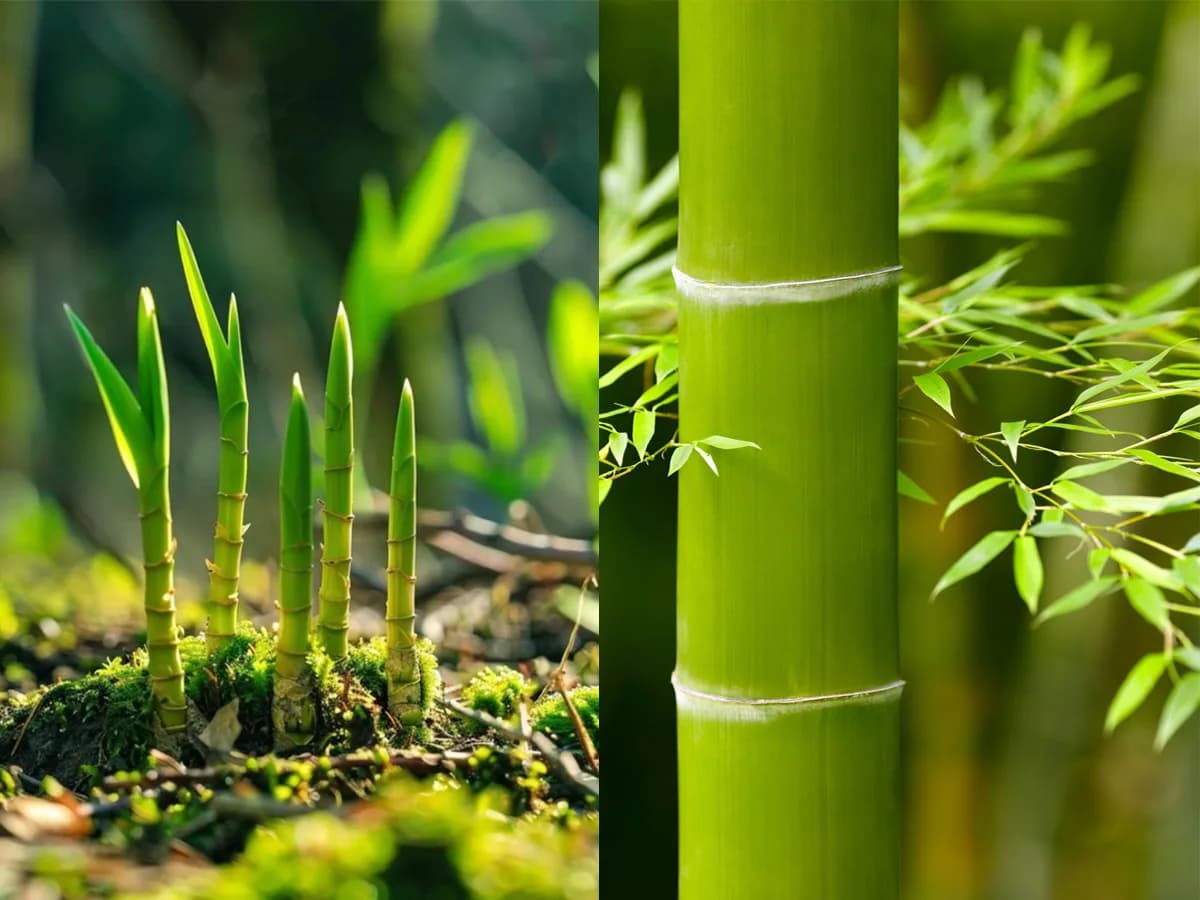
The incredible speed of bamboo's growth is a marvel of the natural world, driven by a unique combination of internal mechanisms and its own underground network. Unlike most plants that grow from their tips, bamboo has specialized growth zones at the base of each segment, called intercalary meristems. These allow the entire stalk to elongate at once, almost like an antenna extending. The rapid growth is not due to the creation of new cells, but rather the dramatic expansion of pre-existing cells that inflate with water. This cellular elongation, fueled by an extensive root system, allows some species to grow at a pace visible to the naked eye. For instance, the Moso bamboo species has been recorded growing nearly 4.8 centimeters in a single hour under ideal conditions.
This remarkable growth is supported by a sprawling underground system of rhizomes. This network functions as the true heart of the bamboo grove, storing vast amounts of energy and nutrients needed to power the rapid emergence of new shoots. A single grove is often one interconnected organism, allowing it to channel its collective resources into new growth. This is why bamboo can be harvested without killing the plant; the rhizome system remains intact and ready to send up new stalks.
The life cycle of bamboo is also distinct from that of trees. A bamboo culm, or stalk, reaches its full height and diameter in a single growing season, which can be as short as two to four months. After this initial surge, the individual stalk does not grow any taller or wider during its lifespan of about ten years. This rapid maturation, combined with its ability to regenerate quickly from its rhizome network, is what makes bamboo such a valuable and sustainable resource for everything from construction materials to textiles.