
72
Learn More
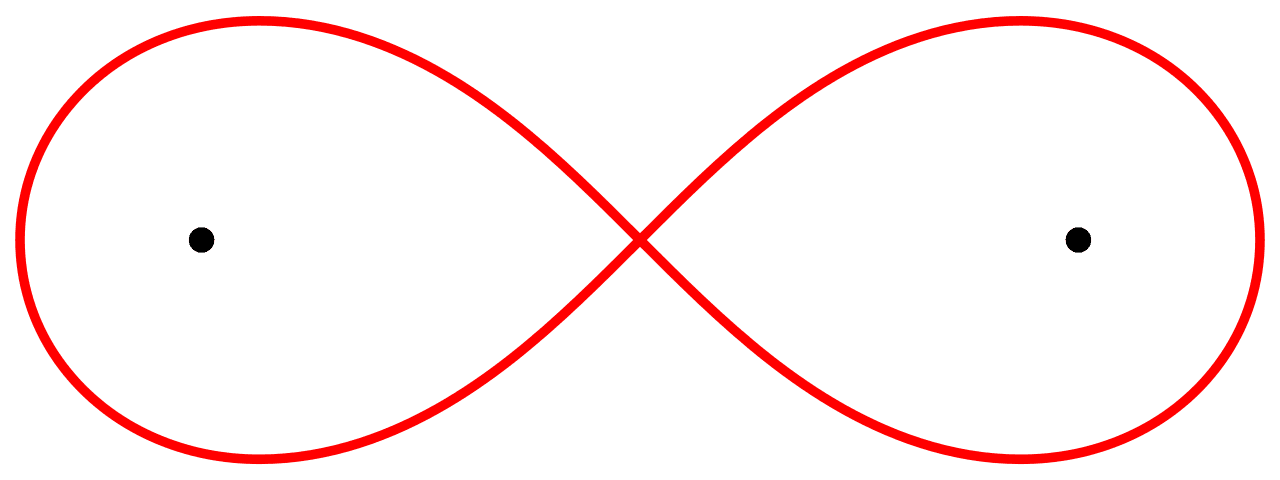
While the iconic figure-eight symbol for infinity is widely recognized, its formal name, lemniscate, is less known. The term "lemniscate" originates from the Latin "lemniscatus," which means "decorated with ribbons." This name was given to various figure-eight shaped curves by mathematicians, with Swiss mathematician Jakob Bernoulli being the first to formally study a curve of this shape in the late 17th century. The name aptly describes the symbol's resemblance to a gracefully tied ribbon.
The infinity symbol itself was first introduced in a mathematical context by English mathematician John Wallis in 1655. Wallis used the symbol in his work "De sectionibus conicis," but he never explained his reasoning for choosing this particular shape. This has led to several theories about its origins. One prominent theory suggests that Wallis, a classical scholar, may have adapted it from the Roman numeral for 1,000, which was sometimes written as CIƆ. Another possibility is that he was inspired by the ancient ouroboros symbol, which depicts a serpent or dragon eating its own tail and represents eternity and the cyclical nature of life.
Beyond its mathematical beginnings, the lemniscate has been embraced in various cultures and symbolic contexts. In modern mysticism, it has become identified with the ouroboros, symbolizing the infinite and eternal. It also appears in graphic designs, such as the Métis flag in Canada, where it can represent the hope for an infinite future for the Métis culture. Whether in a complex mathematical equation or a piece of art, the lemniscate serves as a simple yet profound representation of the concept of endlessness.
Related Facts
83
78
77
72
70
68