
8
Learn More
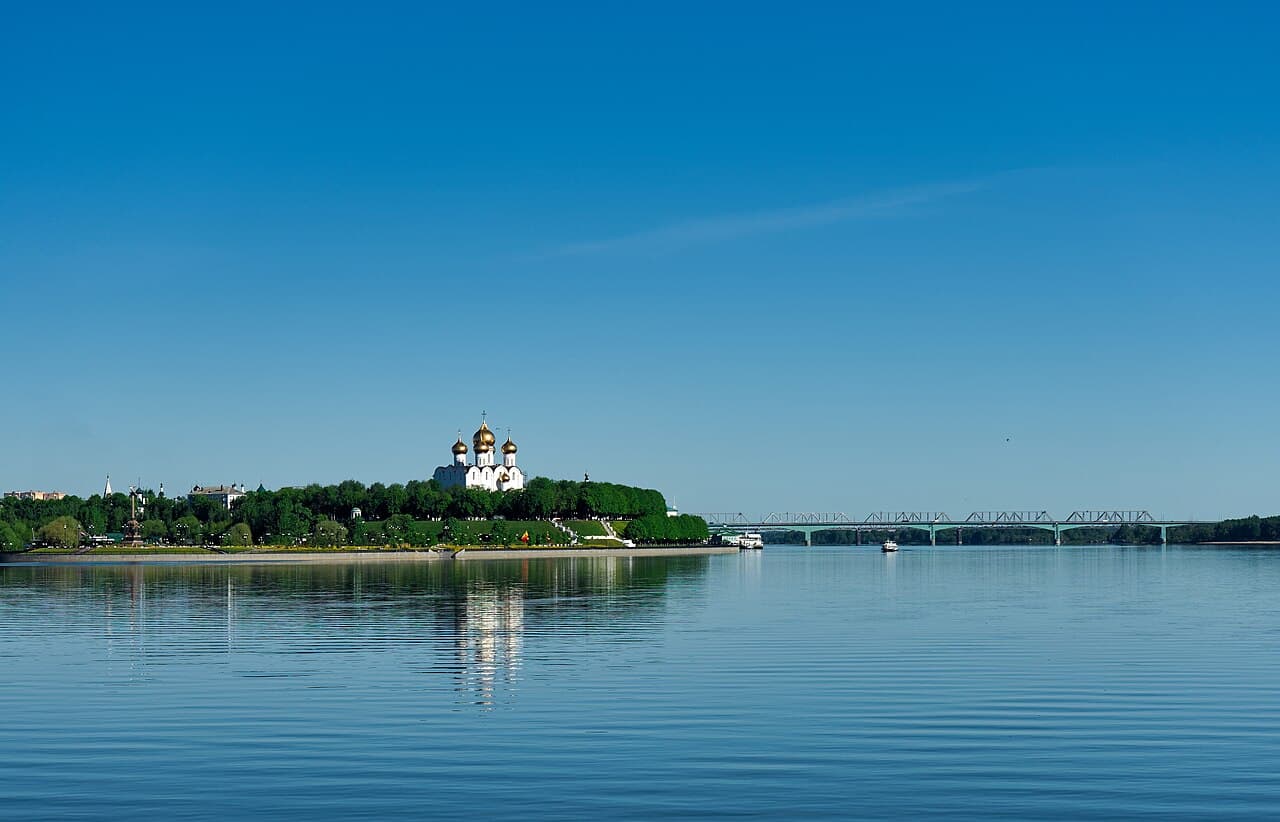
Flowing entirely within Russia, the Volga River holds the title of Europe's longest river, stretching approximately 2,194 miles (3,531 kilometers). It begins in the Valdai Hills northwest of Moscow and travels to the Caspian Sea. Widely considered Russia's national river, the Volga has been a crucial lifeline for centuries, serving as an important route for trade, migration, and cultural exchange. Its vast drainage basin covers about one-third of European Russia and is home to a significant portion of the country's population. The river is a major source of hydroelectric power and supports a large portion of Russia's inland freight transport.
The second-longest river in Europe is the Danube, which flows for about 1,770 miles (2,850 km). Unlike the Volga, the Danube is an international waterway, originating in Germany's Black Forest and emptying into the Black Sea. It is the longest river in the European Union and passes through or forms a border of ten countries: Germany, Austria, Slovakia, Hungary, Croatia, Serbia, Bulgaria, Romania, Moldova, and Ukraine. The Danube has played a vital role in the history and cultural development of Central and Southeastern Europe, with its banks lined with historic castles and fortresses. It has long been a critical commercial highway, and today, it connects four national capitals: Vienna, Bratislava, Budapest, and Belgrade.
More Geography Trivia Questions
28
What river runs through Cairo, Egypt?
21In which city can you find the point where Germany, France, and Switzerland all meet?
21I'll give you the old name for a place, you give the new name. a. Rhodesia? b. Cathay? c. Abyssinia?
21What country lies directly north of Vietnam?
20Which town in Marin county is named after an Italian phrase meaning ''beautiful view"?
20Which plant, common around Christmas time, contains poisonous berries which can cause acute stomach irritation if eaten?