
19
Learn More
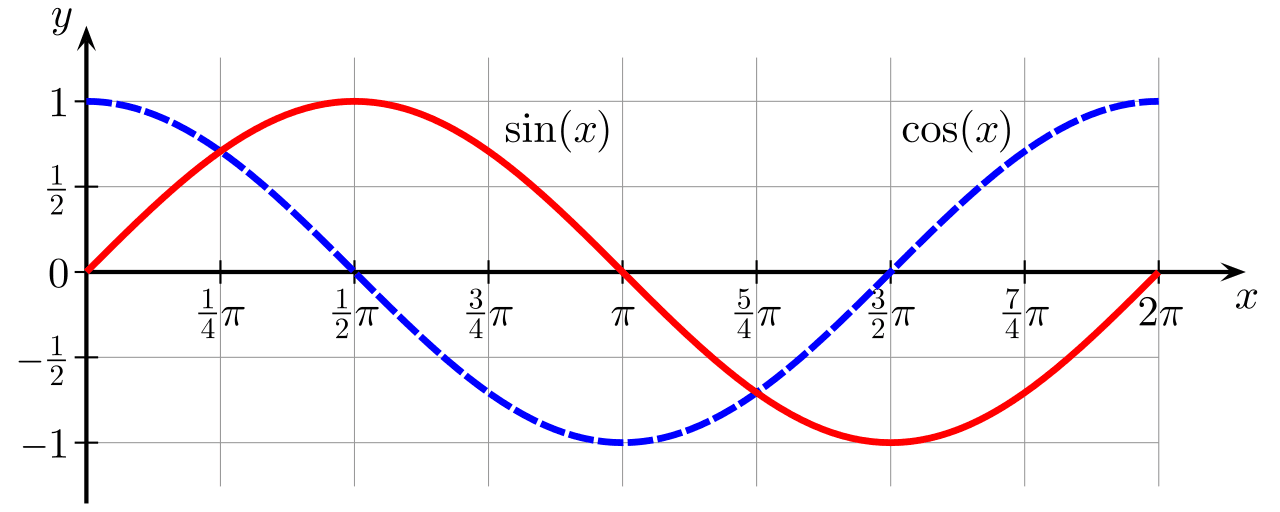
In a right-angled triangle, the relationships between the angles and the side lengths are fixed. For any given angle, the ratio of the length of the side directly across from it (the opposite side) to the length of the triangle's longest side (the hypotenuse) is always the same. This constant ratio is what we call the sine. No matter how large or small the triangle is, if the angle remains the same, its sine value will not change. This reliable property makes the sine a fundamental tool in mathematics. A common way to remember this relationship is the mnemonic SOH-CAH-TOA, where SOH stands for Sine is Opposite over Hypotenuse.
The study of these relationships, known as trigonometry, has ancient roots, with early forms being used by Egyptian and Babylonian mathematicians over two thousand years ago. The systematic study began with Greek astronomers like Hipparchus, who used it for celestial calculations. The concept of the sine function itself was developed and documented by Indian mathematicians around the 5th century AD. Initially created to understand the geometry of triangles and its application to astronomy (Deals), the sine function's usefulness has expanded significantly. Today, it is essential for modeling periodic phenomena like sound waves, light waves, and the oscillations of a pendulum.
More Entertainment Trivia Questions
20
Which actor played the role of Officer Gannon on TV's Dragnet, and the role of Sherman Potter in M.A.S.H.?
201931 horror films: a. Which actor starred in the title role of the original 1931 film, Dracula? b. Who starred as Dr. Frankenstein's monster in the 1931 original of Frankenstein?
20After the stabbing death of two teenagers by another teenager in 1959, some radio stations banned this Bobby Darin hit record from "The Threepenny Opera." What was the song title?
20This operatic tenor who died in 1921 was the first singer ever to sell over one million records. What was his name?
20Can you name the actor, born in South Africa to British parents, who most often portrayed Sherlock Holmes in films, 14 times in the 1940's?
20Which entertainer, musician and author was the original host of the Tonight Show from 1954 to 1957?