
5
Learn More
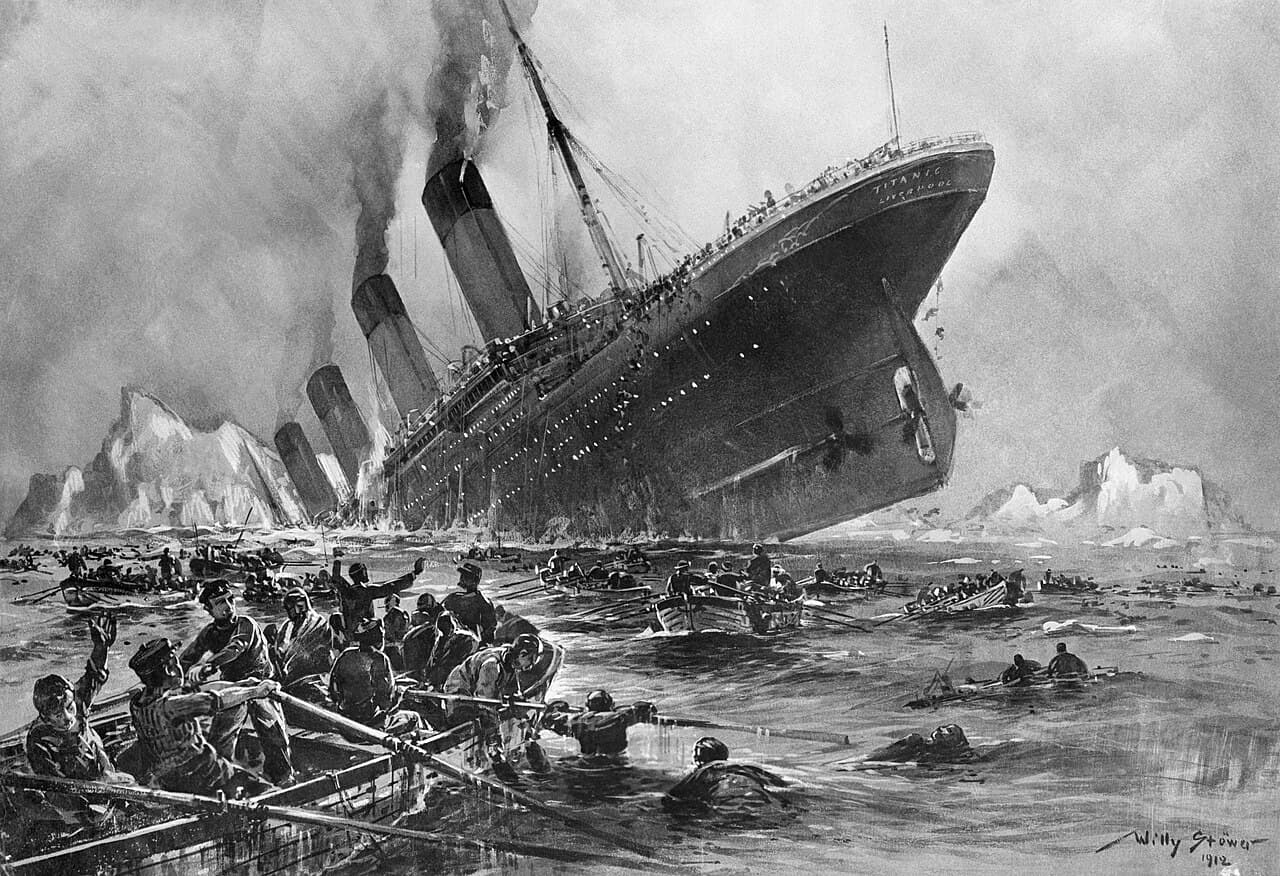
On its maiden voyage from Southampton, England, to New York City, the RMS Titanic struck an iceberg late on the night of April 14, 1912. In the frigid North Atlantic waters, roughly 370 miles southeast of Newfoundland, the massive passenger liner sustained fatal damage. The collision buckled the ship's hull plates, allowing water to flood six of its sixteen watertight compartments. Though the ship was designed to remain afloat with up to four compartments breached, the extensive damage sealed its fate. Less than three hours later, in the early morning of April 15, the vessel broke apart and sank beneath the waves.
The Titanic was the largest ship afloat at the time and was widely considered a pinnacle of luxury and engineering, even being described as "practically unsinkable." This perception of invincibility contributed to a shocking lack of preparation for such a disaster. The ship was equipped with only 20 lifeboats, enough for about a third of the approximately 2,224 people on board. To make matters worse, a scheduled lifeboat drill had been canceled earlier in the day.
The evacuation was chaotic, and many of the lifeboats were launched without being filled to capacity. As a result of the insufficient number of lifeboats and the rapid sinking, more than 1,500 passengers and crew perished in the disaster. The immense loss of life shocked the world and led to significant improvements in maritime safety regulations, including the establishment of the International Convention for the Safety of Life at Sea.
More History Trivia Questions
71
In what year did the Titanic sink?
70What wall divided Berlin from 1961 to 1989?
53Which ancient wonder was located in Alexandria, Egypt?
31Which empire was ruled by Genghis Khan?
20During World War I, the allies, Britain, France, the USA primarily fought against Germany and which two major forces?
20What is the second largest city in Japan?