
19
Learn More
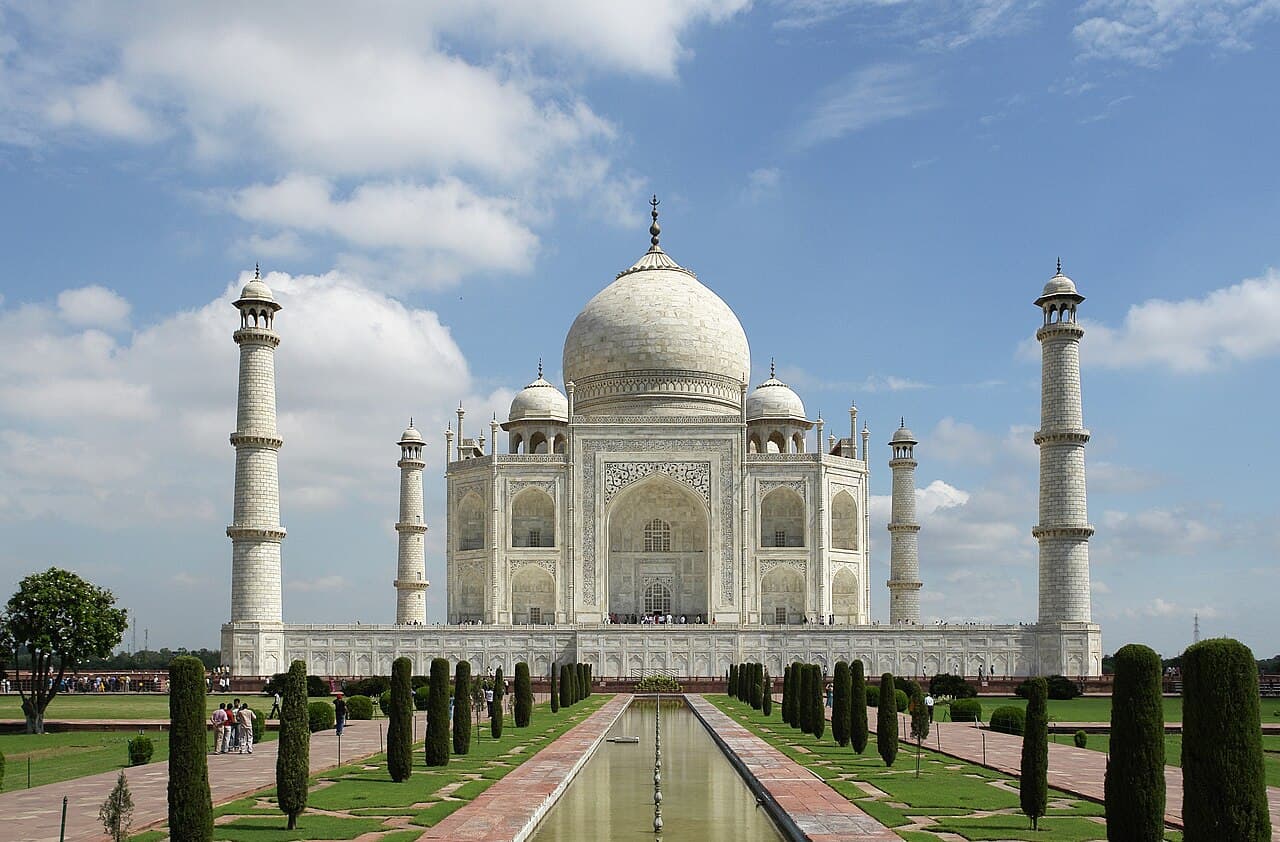
This magnificent white marble mausoleum, located in Agra, India, was commissioned by the Mughal emperor Shah Jahan as a testament of his love for his favorite wife, Mumtaz Mahal. She died in 1631 while giving birth to their 14th child, and the grief-stricken emperor began construction on her final resting place the following year. The main mausoleum was completed around 1648, with the surrounding buildings and gardens finished in 1653. The name of the structure translates to "Crown of the Palace," a fitting title for the elaborate tomb of a beloved queen.
The construction was a monumental undertaking, involving over 20,000 artisans and laborers from across India, Persia, and the Ottoman Empire. The chief architect is believed to have been Ustad Ahmad Lahori. The pristine white marble was brought from Rajasthan, but the structure is also adorned with 28 varieties of precious and semi-precious stones, including sapphires, emeralds, and jasper, which were sourced from various parts of Asia. The total cost of construction at the time was estimated to be around 32 million rupees.
A symbol of enduring love and a masterpiece of Mughal architecture, this iconic structure combines elements of Indian, Persian, and Islamic design. In 1983, it was designated a UNESCO World Heritage Site, recognized as "the jewel of Muslim art in India and one of the universally admired masterpieces of the world's heritage". Today, it stands not only as a memorial to Mumtaz Mahal but also as a symbol of India's rich history, attracting millions of visitors each year. Eventually, Shah Jahan was also buried alongside his wife within the mausoleum.
More Other Trivia Questions
20
Venetian blinds were invented in which country?
20According to Irish legend, a man called Jack could not enter heaven because he was a miser, and could not enter hell because he had scorned the devil. As a result, he had to walk the earth for eternity with his light. This legend is the origin for what ph
20Which US state has the highest per capita income, almost $20,000 per person, as well as America's highest median household income, around $41,000?
20What is the name of the five-dice game where players try to create different combinations similar to poker hands?
20When we see statues of military heroes of horseback, the position of the horse's feet often signify something. What is signified if the horse's two front feet are rearing up in the air?
20Cemetery officials in this major city have decided that his burial site has become too much trouble to keep up. So as soon as the 30-year lease on his grave expires in July, 2001, his body will be moved. Which city, which person?