
5
Learn More
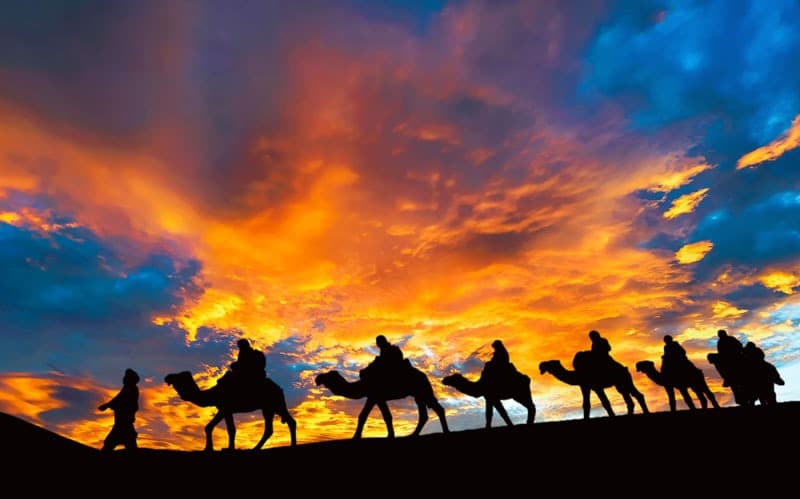
The famous trade route connecting the distant empires of China and Rome was not a single path but an extensive network of roads, trails, and sea routes that became known as the Silk Road. For centuries, the most sought-after commodity transported along this perilous journey was the lustrous textile from which the route derives its name. Chinese silk was a symbol of wealth and status in the West, so highly prized that it was worth its weight in gold in Rome. The Romans, in fact, had such a high demand for the luxurious fabric that it led to a significant outflow of gold from their empire.
While many other goods, including spices, tea, porcelain, and precious metals, were exchanged along this route, silk was an ideal commodity for the arduous long-distance travel. Its lightweight nature meant that it could be transported more easily than heavier goods, and its high value made the dangerous journey profitable. The caravans, often consisting of Bactrian camels capable of enduring harsh conditions, traversed treacherous deserts and mountains, facing the constant threat of bandits. Merchants typically traveled only sections of the route, passing goods from one trader to the next, which increased the final cost of the products.
The secret of silk production, or sericulture, was a closely guarded secret in China for centuries, which maintained its high value. Beyond its economic importance, the Silk Road was a significant conduit for cultural exchange, facilitating the spread of ideas, religions like Buddhism, and technologies such as papermaking and gunpowder between the East and West. This historic network, therefore, did more than just transport valuable goods; it played a crucial role in shaping civilizations.
More History Trivia Questions
71
In what year did the Titanic sink?
70What wall divided Berlin from 1961 to 1989?
53Which ancient wonder was located in Alexandria, Egypt?
31Which empire was ruled by Genghis Khan?
20During World War I, the allies, Britain, France, the USA primarily fought against Germany and which two major forces?
20What is the second largest city in Japan?