
15
Learn More
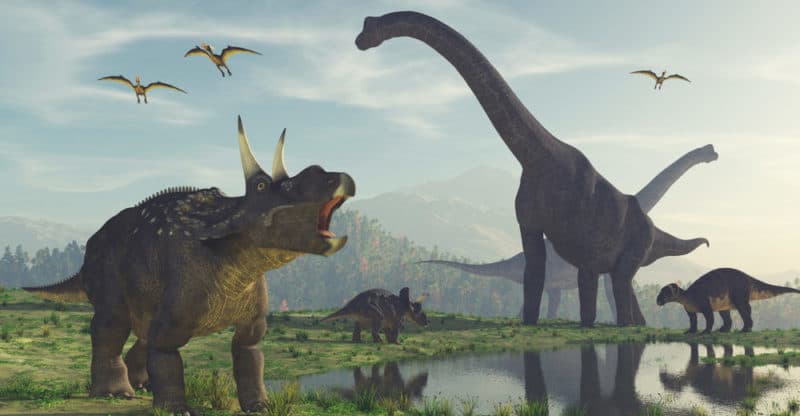
This geological period gets its name from the Jura Mountains, which stretch along the border of France and Switzerland. In the late 18th century, naturalist Alexander von Humboldt recognized that the limestone strata in this mountain range were from a distinct and ancient time. This led to the naming of the period, which lasted from roughly 201 to 145 million years ago, as the second of three parts of the Mesozoic Era. During this time, the supercontinent Pangaea was actively breaking apart, creating new seas and influencing the climate, which was much warmer and more humid than it is today.
The Jurassic is most famously known as a golden age for dinosaurs, which became the dominant animals on land. This era saw the rise of some of the most iconic dinosaurs, from the giant, long-necked sauropods like Brachiosaurus and Diplodocus to the heavily-plated Stegosaurus and the formidable predator Allosaurus. While these massive reptiles ruled the planet, other significant evolutionary milestones were occurring.
It was during this period that the very first birds, such as the famous Archaeopteryx, evolved from a branch of theropod dinosaurs. Alongside them, the earliest mammals were also present. These first mammals were typically very small, shrew-like creatures that lived in the shadows of their giant reptilian contemporaries, carving out niches in a world dominated by dinosaurs.