
13
Learn More
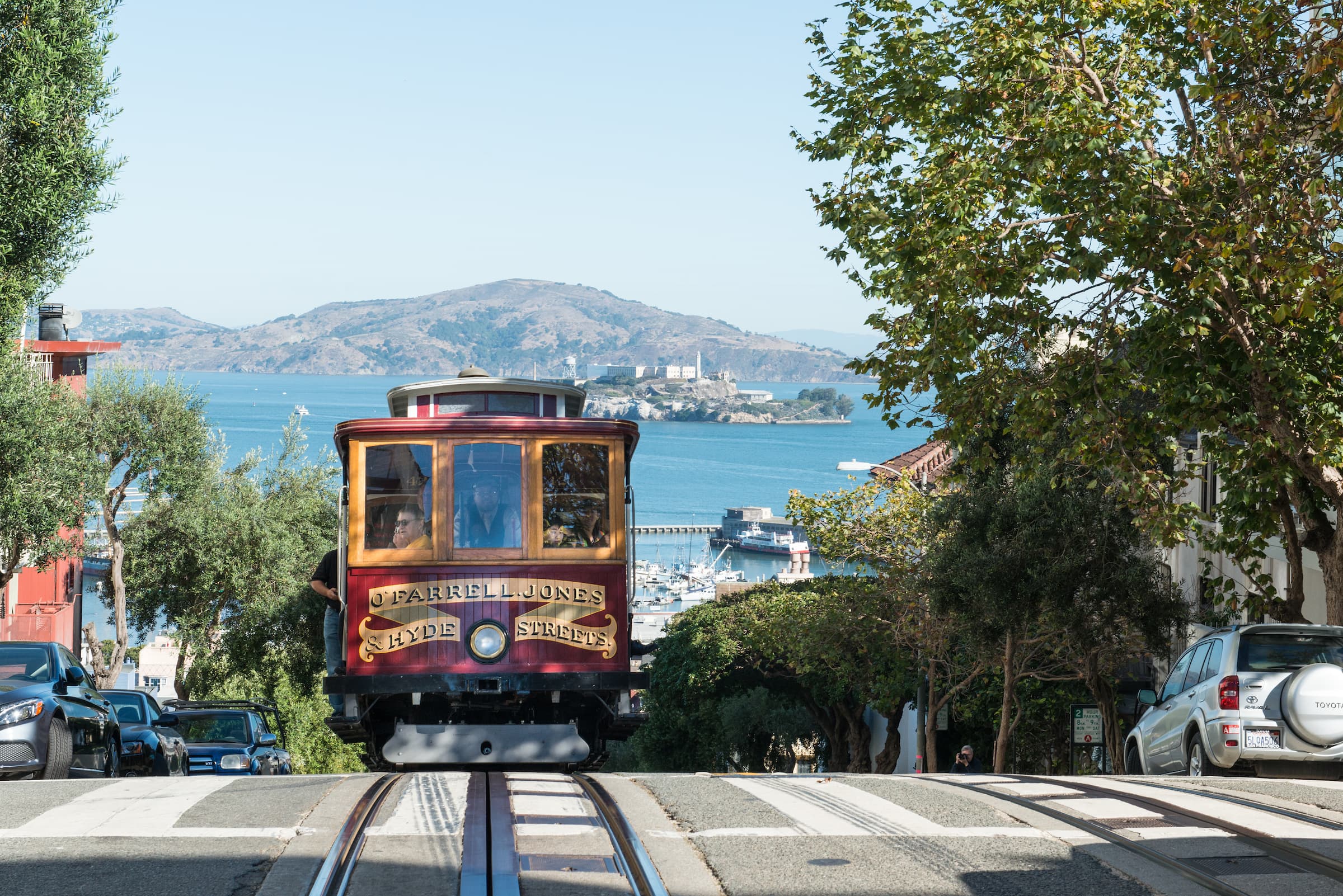
In 1873, Andrew Smith Hallidie debuted a new form of public transit designed to conquer the steep hills of San Francisco. The inspiration for a cable-driven rail system came after Hallidie witnessed a tragic accident where a horse-drawn streetcar slid backward down a slippery cobblestone street, killing the horses. His invention, which utilized a continuously moving underground cable to pull the cars along a track, proved to be a great success and revolutionized the city's transportation. At its peak, the system had 23 lines, but by the 1940s, many were being replaced by more modern electric streetcars and buses.
A public campaign to preserve the historic cable cars ultimately saved the remaining lines. In 1964, this iconic system was designated a National Historic Landmark, a special recognition for its significance in American history. Because they are fully operational and continue to transport passengers daily, they are uniquely referred to as the country's only moving National Historic Landmarks. The cars themselves, along with the powerhouse and the tracks, are all part of this historic designation.
Today, only three cable car lines remain, serving as a major tourist attraction and a beloved symbol of the city. They are the world's last manually operated cable car system, requiring skilled "gripmen" to maneuver the cars. This living piece of history offers a unique glimpse into a bygone era of transportation, allowing people to ride on a piece of the past.
More Other Trivia Questions
20
Venetian blinds were invented in which country?
20According to Irish legend, a man called Jack could not enter heaven because he was a miser, and could not enter hell because he had scorned the devil. As a result, he had to walk the earth for eternity with his light. This legend is the origin for what ph
20Which US state has the highest per capita income, almost $20,000 per person, as well as America's highest median household income, around $41,000?
20What is the name of the five-dice game where players try to create different combinations similar to poker hands?
20When we see statues of military heroes of horseback, the position of the horse's feet often signify something. What is signified if the horse's two front feet are rearing up in the air?
20Cemetery officials in this major city have decided that his burial site has become too much trouble to keep up. So as soon as the 30-year lease on his grave expires in July, 2001, his body will be moved. Which city, which person?