
7
Learn More
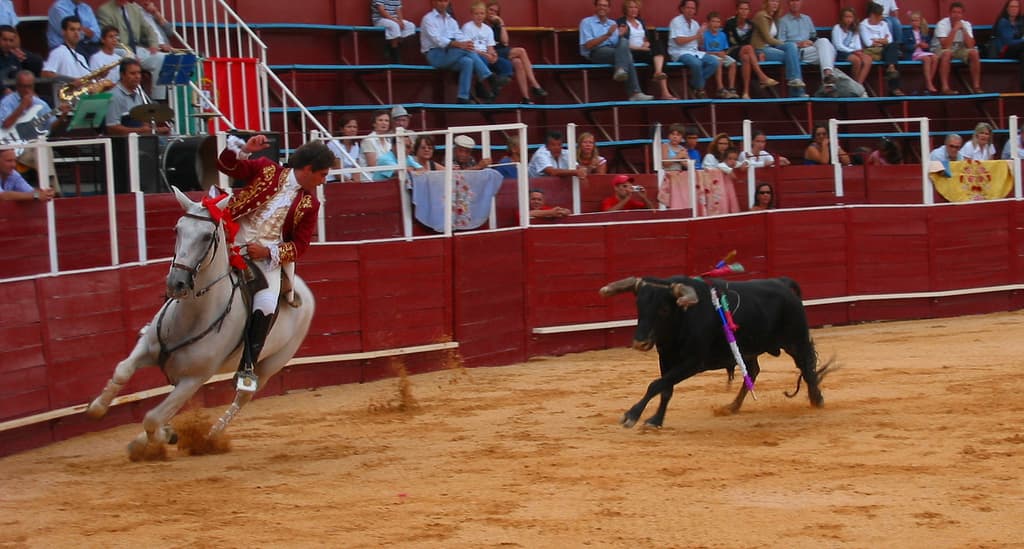
In contrast to the more famous Spanish tradition, bullfights in this European nation do not end with the animal's death in the ring. A law established in the 1928 prohibited the killing of bulls in front of an audience, making it a distinct and less fatal spectacle. This key difference is why it has earned a reputation for a more humane form of the controversial sport. While the bull is not killed publicly, it may be dispatched by a professional butcher after the event or, if it performed exceptionally well, be retired to pasture for breeding.
The Portuguese bullfight, or 'tourada', unfolds in distinct stages. The main star is often the 'cavaleiro', a horseman who skillfully places small, barbed darts called 'bandarilhas' into the bull's back from a specially trained Lusitano horse. This display of horsemanship is followed by a unique and daring act known as the 'pega'. In this phase, a group of eight men on foot, the 'forcados', challenge the bull directly without any weapons. The front man provokes a charge and attempts to grab the bull's head, with his companions quickly moving in to secure the animal and subdue it.
This tradition focuses more on the skill of the horse rider and the collective bravery of the forcados rather than the solitary matador's final strike. The practice of covering or trimming the bull's horns to make them less sharp also contributes to the spectacle's reduced lethality. The combination of these elements—the prohibition of an in-arena kill, the focus on horsemanship, and the dramatic, weaponless challenge by the forcados—creates a unique cultural event that sets Portuguese bullfighting apart.
More Geography Trivia Questions
31
What is the largest ocean on Earth?
28What river runs through Cairo, Egypt?
21I'll give you the old name for a place, you give the new name. a. Rhodesia? b. Cathay? c. Abyssinia?
21What country lies directly north of Vietnam?
20Which tiny country is sandwiched between Switzerland and Austria?
20What is the modern name of the city formerly known as Leningrad?