
5
Learn More
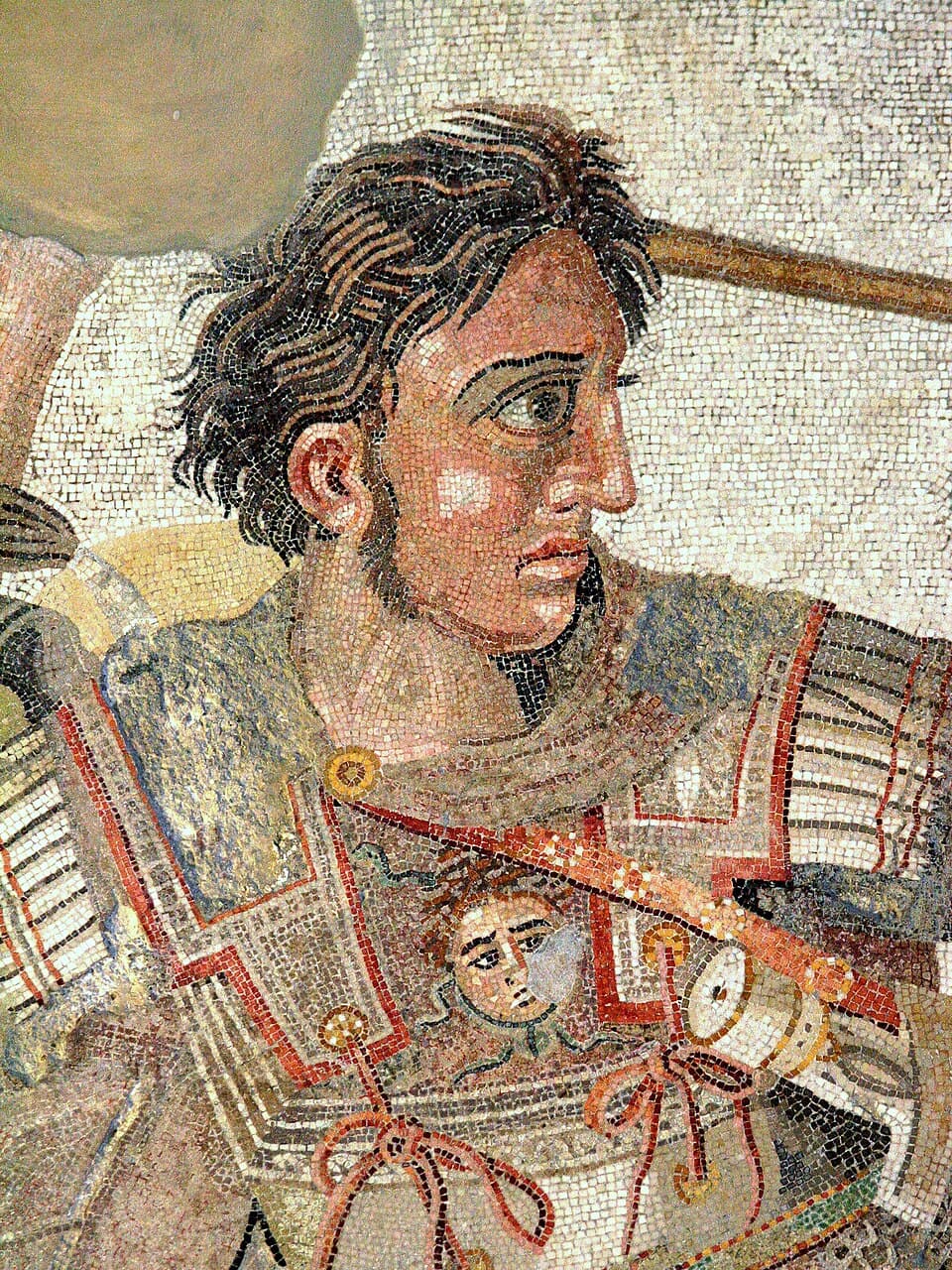
Of the choices given, the great Macedonian conqueror's eastward expansion reached its final frontier in India. Alexander the Great's ambitious campaign began in 334 BCE, and over the next several years, he successfully conquered the vast Persian Achaemenid Empire. This string of victories brought his forces through modern-day Turkey, Syria, Egypt, and Iraq, culminating in the decisive Battle of Gaugamela in 331 BCE, which effectively shattered Persian power.
Following the defeat of the Persian Empire, Alexander set his sights further east, on territories that had been part of the Persian domain, which included parts of northwestern India. In 327 BCE, he marched into the Indus Valley. The most significant confrontation of this campaign was the Battle of the Hydaspes in 326 BCE against the Indian king Porus. Although Alexander was victorious, the fierce resistance and the sight of Porus's war elephants took a heavy toll on the morale of his soldiers.
Exhausted by years of relentless campaigning and daunted by the prospect of facing the powerful Nanda Empire further east, Alexander's army mutinied at the Hyphasis River (modern-day Beas River). This refusal to march further marked the easternmost point of his conquests. He was forced to turn back, and his vast empire, stretching from Greece to northwestern India, was established. There is no historical evidence to suggest that Alexander's forces ever reached China; the geographical barriers and the sheer distance were immense, and the two civilizations had no direct knowledge of each other at the time.
More History Trivia Questions
71
In what year did the Titanic sink?
70What wall divided Berlin from 1961 to 1989?
53Which ancient wonder was located in Alexandria, Egypt?
31Which empire was ruled by Genghis Khan?
20During World War I, the allies, Britain, France, the USA primarily fought against Germany and which two major forces?
20What is the second largest city in Japan?