
80
Learn More
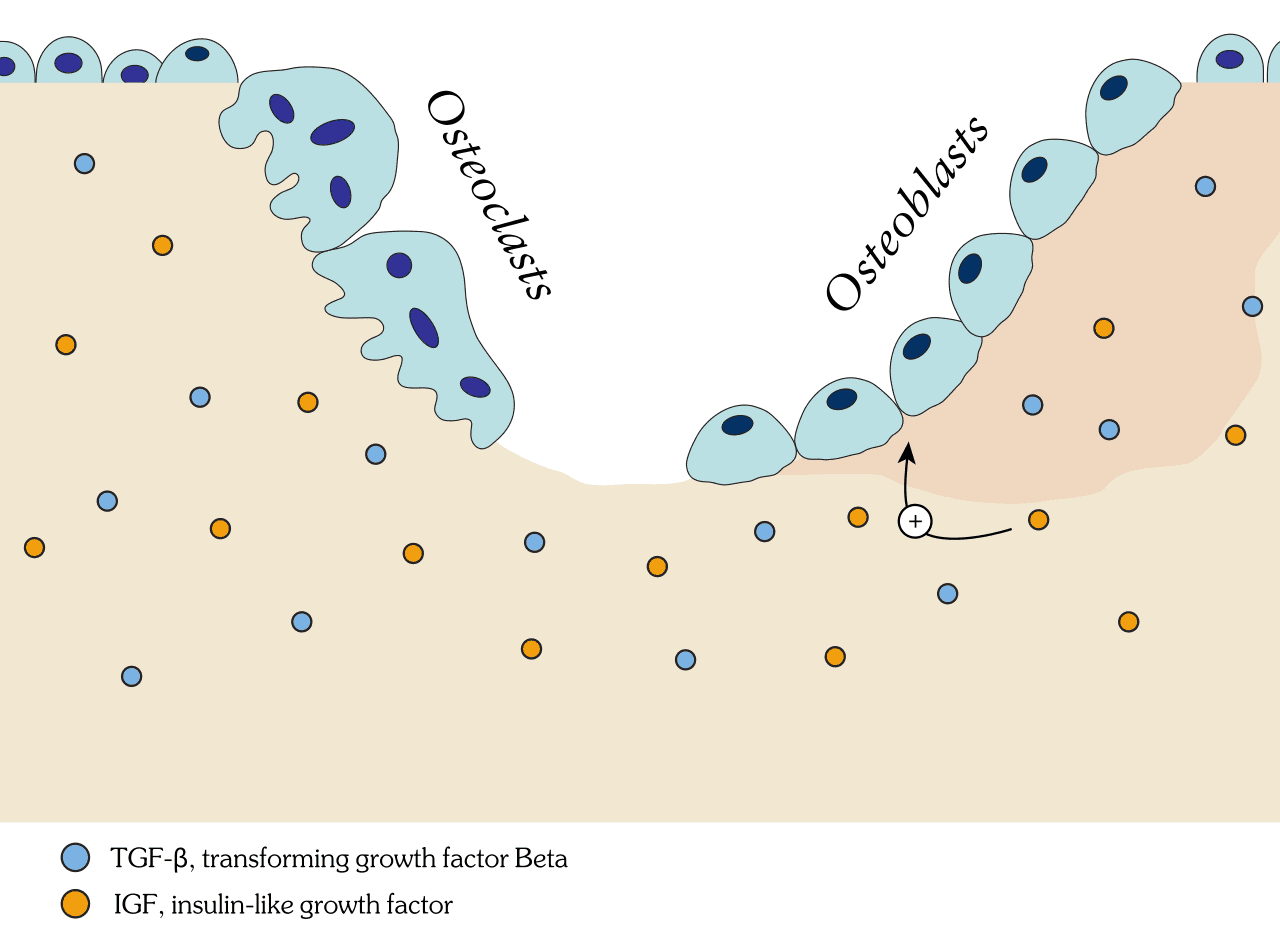
Your skeleton is a surprisingly dynamic and living organ, constantly undergoing a process of self-repair and renewal. This intricate maintenance is carried out by two specialized types of cells: osteoclasts and osteoblasts. Think of osteoclasts as a demolition crew that seeks out and dissolves old or damaged bone tissue, a process known as resorption. Following closely behind, osteoblasts act as the construction crew, laying down a new protein matrix that then mineralizes to become fresh, strong bone. This coordinated, lifelong cycle of breakdown and rebuilding is fundamental to repairing micro-damage and maintaining mineral balance throughout the body.
The pace of this renewal changes dramatically throughout our lives. During childhood and adolescence, this process is in overdrive, completely renewing the skeleton in as little as two years to support growth. In adulthood, the rate slows to the widely cited seven to ten-year cycle. However, beginning in our late 30s, the balance between these cellular teams begins to shift. The activity of bone-dissolving osteoclasts starts to outpace the bone-forming osteoblasts. This gradual shift means more bone is broken down than is replaced, leading to a decrease in bone density and strength over time, which explains the increased risk of fractures and conditions like osteoporosis in later life.