
68
Learn More
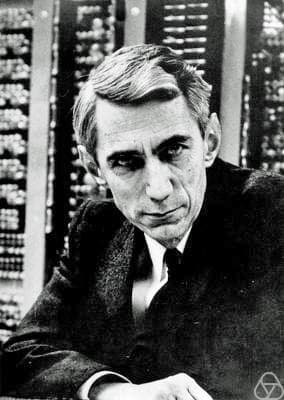
The sheer number of potential moves and game variations in chess is so immense that it surpasses the estimated number of atoms in the observable universe. This staggering figure, known as the Shannon number, was calculated by American mathematician Claude Shannon in his 1950 paper, "Programming a Computer for Playing Chess," which laid the groundwork for computer chess. Shannon estimated the game-tree complexity of chess to be around 10 to the 120th power. To put this into perspective, scientists estimate the number of atoms in the observable universe to be roughly 10 to the 80th power, a significantly smaller number.
Shannon's calculation was a conservative estimate based on an average of about 30 legal moves per position in a typical 40-move game. Even with this simplification, the resulting number demonstrates the impracticality of "solving" chess through brute-force computation. If a computer could analyze one chess variation every microsecond, it would still require over 10 to the 90th power years to evaluate just the first move for both players. This is why, despite the existence of powerful chess engines, the game remains theoretically unsolved.
The concept of the Shannon number highlights the profound complexity of chess, a game with a defined set of rules and a finite board. While not all possible games are strategically sensible, the sheer volume of possibilities ensures that chess will continue to be a game of creativity, intuition, and skill for the foreseeable future. Even with advancements in artificial intelligence, the complete mastery of every possible outcome in chess remains far beyond our grasp, a testament to the game's enduring depth and appeal.
Related Weird Facts
83
78
77
72
72
70