
84
Learn More
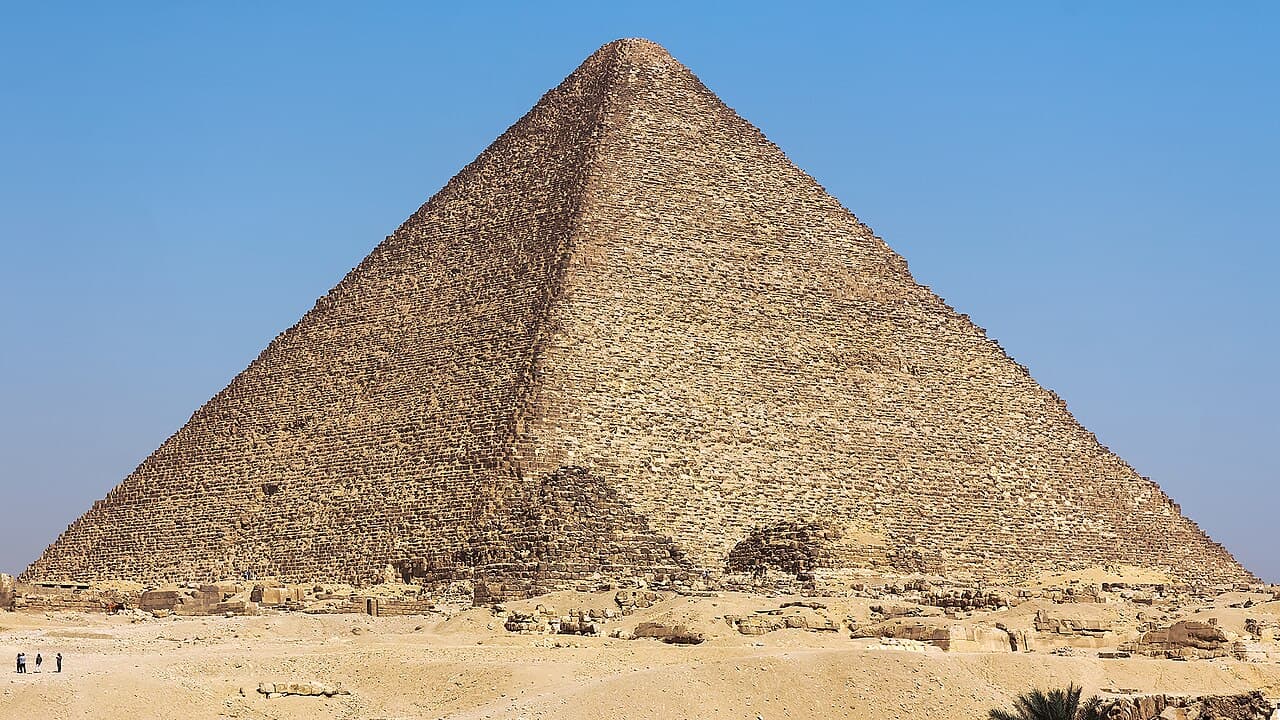
The vast expanse of ancient Egyptian history can be difficult to comprehend, but the timeline of its most famous ruler and its most iconic structures offers a surprising perspective. The Great Pyramid of Giza, a tomb for the pharaoh Khufu, was constructed around 2600 BCE. In contrast, Cleopatra VII, the last active pharaoh of Egypt, reigned from 51 to 30 BCE. This means that the world of Cleopatra was more than two and a half millennia removed from the era of the pyramid builders. To her, the Great Pyramid was already an ancient wonder, a relic of a distant past far more remote than her own civilization is to us today.
Culturally and ancestrally, Cleopatra was also distinct from the pharaohs who commissioned the pyramids. She was of Macedonian Greek descent, the final ruler of the Ptolemaic dynasty which began after the death of Alexander the Great. While she embraced many Egyptian customs and was the first of her line to learn the Egyptian language, her historical context is firmly rooted in the Hellenistic period. This places her in a world of Roman legions and burgeoning imperial power, a stark contrast to the Old Kingdom society that raised the pyramids.
The temporal proximity of Cleopatra's reign to the modern era becomes even more striking when compared to the first Moon landing in 1969. The roughly 2,000 years separating her from Neil Armstrong's historic steps is significantly shorter than the approximately 2,500 years that separated her from the completion of the Great Pyramid. This simple chronological fact underscores the immense longevity of ancient Egyptian civilization and highlights the rapid pace of human technological advancement in more recent history. The pyramids stood as ancient monuments in Cleopatra's time, just as her own story now feels like a distant chapter in ours.
Related Facts
84
84
83
81
79
79