
76
Learn More
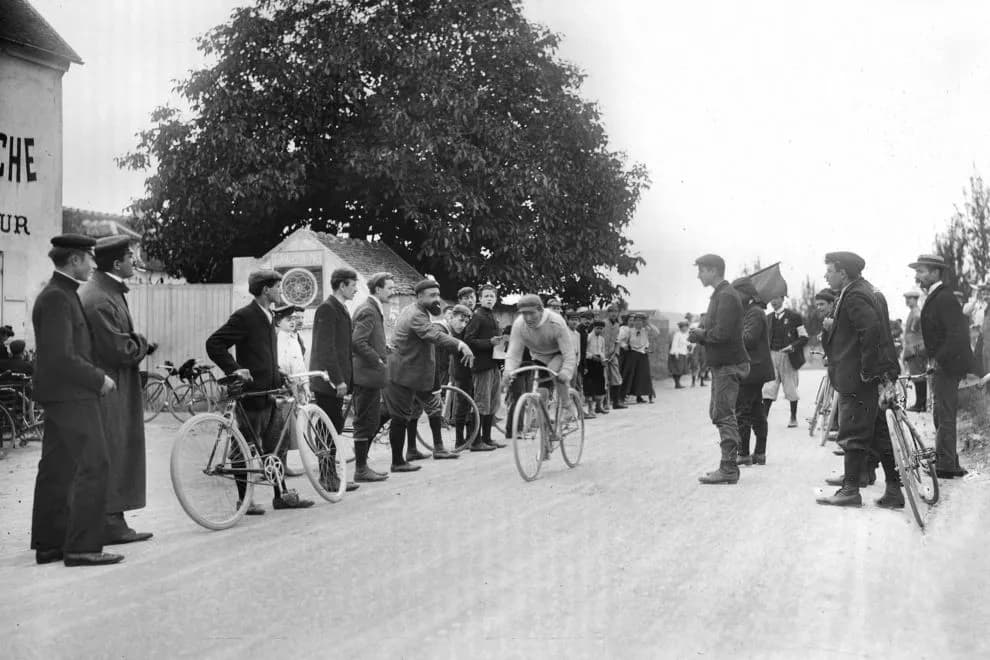
The Tour de France was born out of a fierce rivalry between two French sports newspapers at the turn of the 20th century. The established paper, Le Vélo, was the dominant force in sports media. However, a contentious political scandal known as the Dreyfus Affair led to a schism among its backers, resulting in the creation of a competitor, L'Auto-Vélo, in 1900. The editor of this new publication was Henri Desgrange, a former cycling champion. To visually distinguish itself, L'Auto-Vélo was printed on yellow paper, a decision that would later inspire the iconic yellow jersey worn by the race leader.
Initially, L'Auto-Vélo struggled to gain a foothold, and a lawsuit from Le Vélo forced a name change to simply L'Auto. Facing declining sales, Desgrange held an emergency meeting where a young journalist named Géo Lefèvre proposed a groundbreaking idea: a multi-day bicycle race that would circumnavigate France. This audacious promotional event was designed to capture the public's imagination and, more importantly, to crush its competitor. The grueling first race in 1903 was an immediate success, captivating the nation and dramatically boosting L'Auto's circulation from 25,000 to 65,000 copies. This surge in readership cemented the Tour de France's future and ultimately led to the demise of Le Vélo, which ceased publication in 1904.
Related Facts
84
81
76
75
73
71