
84
Learn More
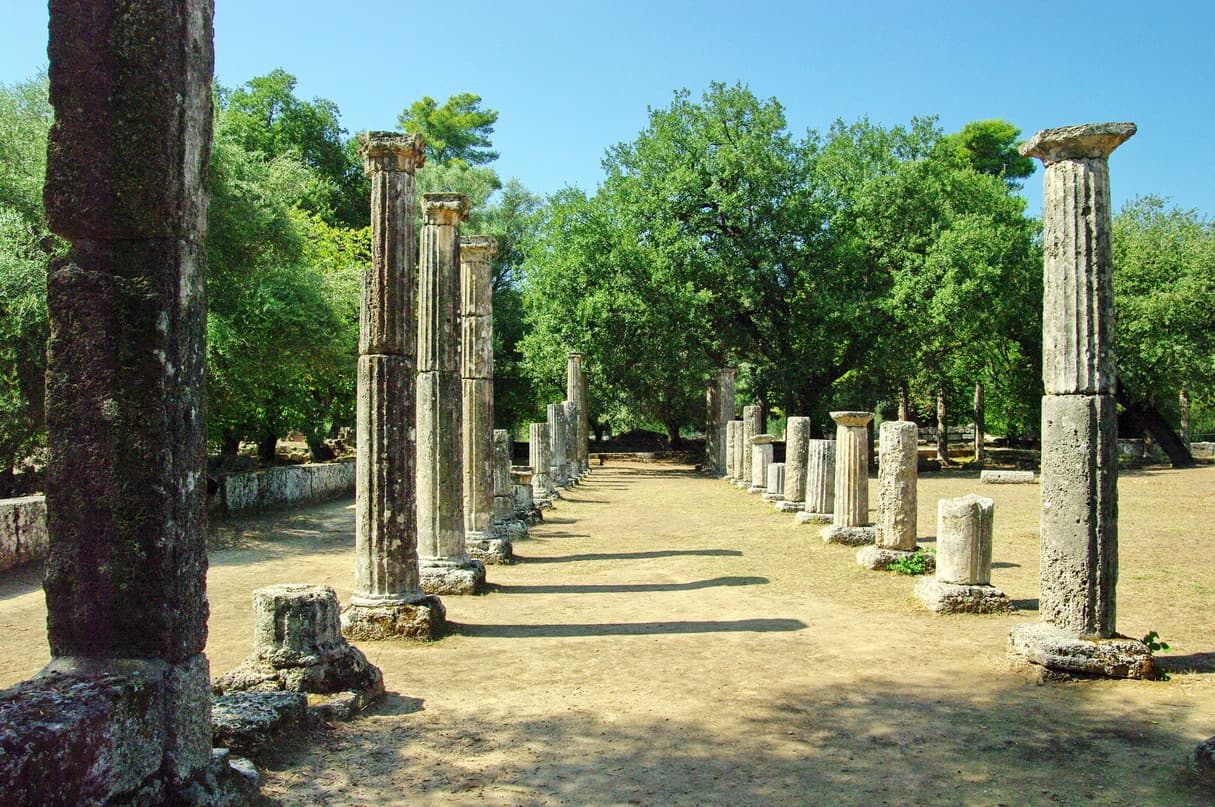
The ancient Olympic Games were fundamentally a religious festival, a stark contrast to the secular, global spectacle we know today. Held at the sacred sanctuary of Olympia in honor of the Greek god Zeus, the inaugural games in 776 BCE were a remarkably minimalist affair. For the first 13 Olympiads, the program consisted of a single event: the *stadion*, a sprint covering approximately 192 meters, the length of the stadium track. The victor of this prestigious race, the first being Coroebus of Elis, had the honor of the entire four-year Olympiad being named after them. This solitary contest underscores the games' early focus on a pure demonstration of speed and strength as a tribute to the gods.
The simplicity of the early games, centered on one footrace, also reflects the societal norms of the time. Only freeborn Greek men were permitted to compete, a rule that persisted for many years. Athletes competed nude, a practice believed to promote an appreciation of the male physique and ensure no one had a competitive advantage. The games were more than just an athletic competition; they were a deeply ingrained cultural and religious event that brought together various Greek city-states. An "Olympic truce" was even enacted to allow safe passage for athletes and spectators to the festival.
Over the centuries, the Olympic program gradually expanded, reflecting the evolving interests and values of Greek society. In 724 BCE, the *diaulos*, a two-stade race, was introduced, followed by the long-distance *dolichos*. Wrestling and the pentathlon, a five-event competition, were added in 708 BCE, with boxing and chariot racing later joining the roster. This expansion transformed the games from a single-day event into a five-day festival, featuring a diverse range of athletic contests alongside religious ceremonies, such as the sacrifice of 100 oxen to Zeus. This evolution highlights the growing importance of the games as a celebration of both athletic prowess and Hellenistic culture.
Related Facts
81
76
76
75
73
71