
83
Learn More
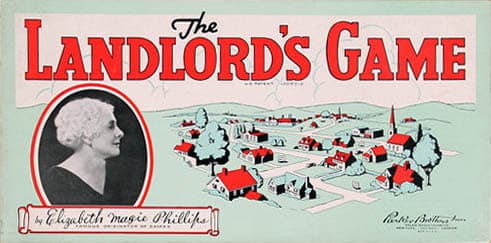
The game many know as a celebration of wealth accumulation was born from a desire to critique the very system it now seems to champion. Elizabeth Magie, a follower of the economist Henry George, designed "The Landlord's Game" in the early 1900s as a "practical demonstration of the present system of land grabbing." George's economic theory, known as Georgism, argued that the economic value of land should belong to all members of society. Magie's game was a tool to illustrate these principles, demonstrating how landlords and property owners amass wealth while tenants become impoverished. She even created two distinct sets of rules: a "monopolist" set where the goal was to crush opponents, and an "anti-monopolist" set where wealth was shared more equitably.
The game gained a following among college students and intellectuals who often created their own handmade versions with local street names. It was one of these modified versions that an unemployed man named Charles Darrow learned to play. Darrow later sold his version of the game to Parker Brothers as his own invention. While Parker Brothers did eventually purchase Magie's patent for The Landlord's Game for $500, they marketed Monopoly with the Darrow origin story, effectively erasing Magie's anti-capitalist intentions.
The version of the game that became a commercial success was the one that rewarded ruthless competition, a stark contrast to Magie's original educational purpose. The "Prosperity" rules, which promoted a more cooperative economic model, were left behind, and the game's critical message was lost. Magie's role in the creation of one of the world's most popular board games was largely forgotten for decades, only coming to light through legal challenges against Parker Brothers in the 1970s.
Related Weird Facts
84
84
84
81
79
79