
71
Learn More
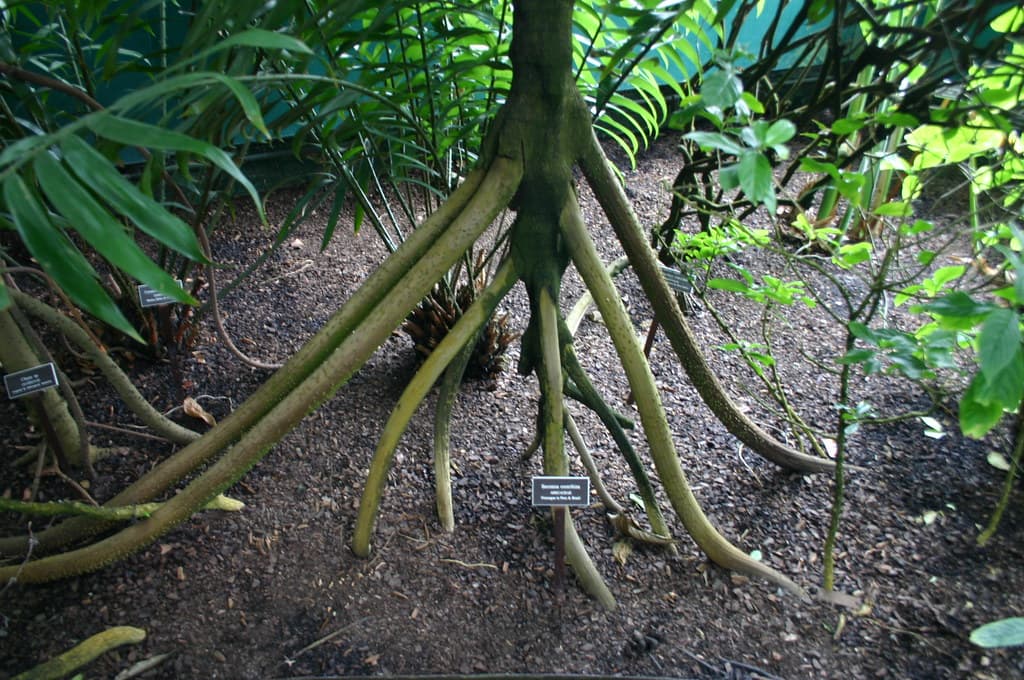
In the dense, competitive rainforests of Central and South America, a unique palm tree, *Socratea exorrhiza*, has captured the imagination of many with its apparent ability to walk. This remarkable tree stands on a cluster of stilt-like roots that emerge from the base of its trunk, sometimes several feet above the ground, giving it the appearance of having legs. The popular story, often shared by rainforest guides, suggests that the tree can slowly relocate itself in search of better sunlight. This is purportedly achieved by growing new roots in the desired direction while the old roots on the opposite side die off, effectively shifting the tree's position over time.
The scientific community, however, remains divided on whether this "walking" is a fact or a fascinating myth. Some researchers have claimed to observe this movement, with estimates of the tree's pace reaching up to 2 to 3 centimeters per day. The primary motivation for this supposed locomotion is the intense competition for light on the dark forest floor; even a slight shift can provide a significant advantage for survival. Other theories propose that the stilt roots help the tree to stabilize itself in swampy or eroding soil or to correct its position if knocked over by falling debris.
Despite these compelling theories, many scientists are skeptical. Detailed studies conducted by biologists like Gerardo Avalos have found no evidence of the trees actually moving their trunks from one spot to another. These studies suggest that while the dynamic root system is a clever adaptation for stability and rapid vertical growth in unstable soils, the tree itself remains stationary. The debate continues, but whether the walking palm truly travels or not, its unusual root structure serves as a remarkable example of plant adaptation in the struggle for survival in the rainforest.