
81
Learn More
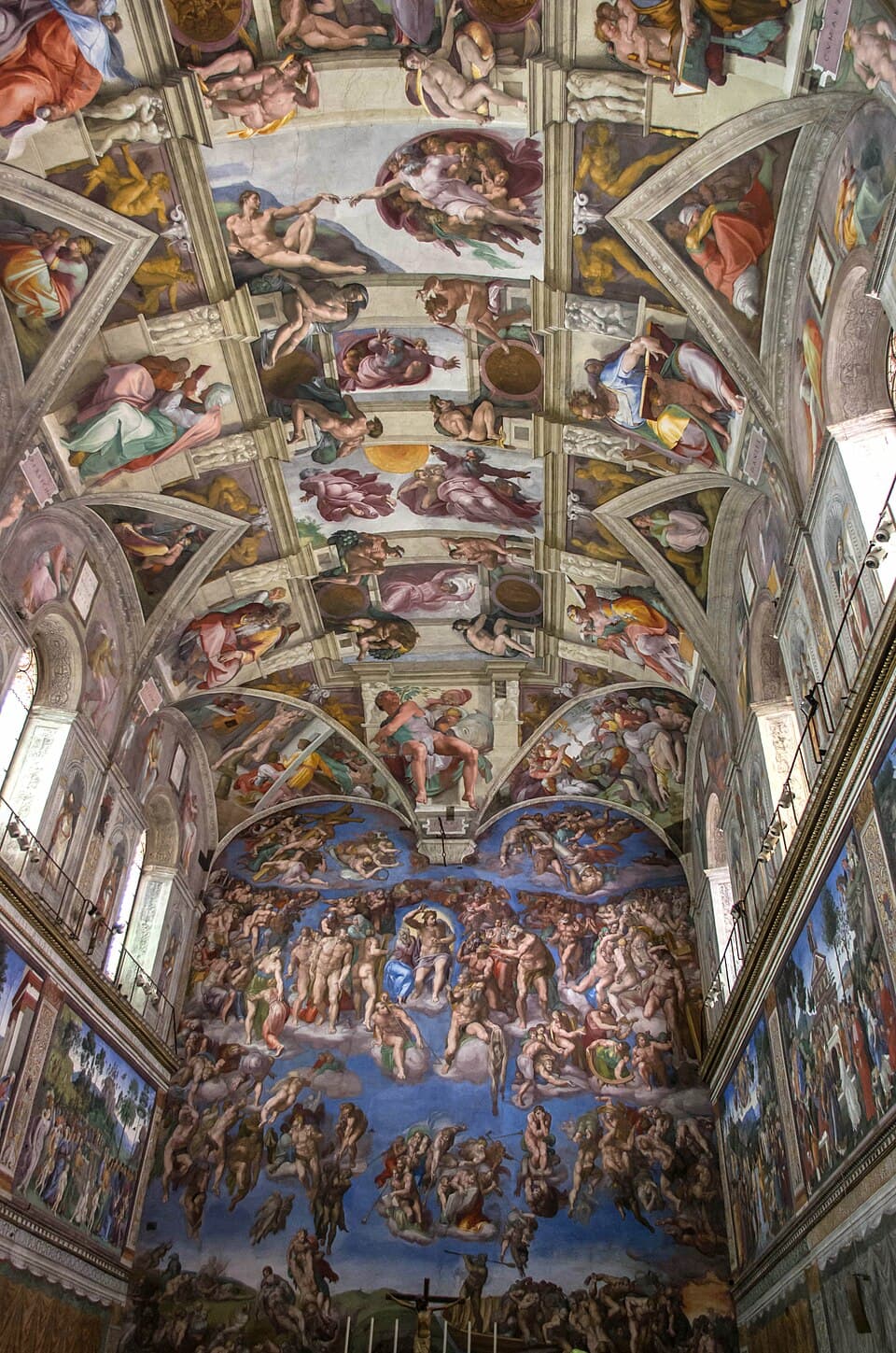
While the Sistine Chapel ceiling is now one of the most revered masterpieces in art history, the project was a physically and psychologically grueling ordeal for Michelangelo. The artist, who considered himself a sculptor rather than a painter, was reluctant to even accept the commission from Pope Julius II and suspected his rivals had pushed for his selection in the hopes that he would fail. He worked for four years, not lying on his back as is commonly believed, but standing on scaffolding of his own design with his head tilted back, enduring immense physical strain. This uncomfortable position led to long-term pain and ailments.
In a sonnet sent to his friend Giovanni da Pistoia in 1509, about a year into the project, Michelangelo vented his frustrations in vivid detail. He lamented the physical deformities the work was causing him, describing a goiter, a contorted spine, and a chest twisted "like a harpy's." Paint dripping from his brush constantly soiled his face, and the endless, awkward motions left him feeling as though his "haunches are grinding into my guts." The psychological toll is also evident in the poem, as he describes his thoughts as "crazy, perfidious tripe" and worries that the unnatural posture would lead to poor artistic results.
The poem culminates in a declaration of his perceived inadequacy for the task, a sentiment he also reportedly shouted at the Pope after mold ruined months of his work. "My painting is dead," he wrote to his friend, urging him to "protect my honor. I am not in the right place—I am not a painter." This raw expression of his suffering provides a stark contrast to the divine beauty of the finished work, offering a uniquely human perspective on the creation of a masterpiece that has awed viewers for centuries.
Related Facts
84
82
81
79
75
72